Helper agentssubagents
Builder on low effort, verifier on high
High effort mostly buys verification: a builder on low, a verifier on high, one CLAUDE.md rule runs each feature through both.
740 saves on X, as of Posted
Prompt
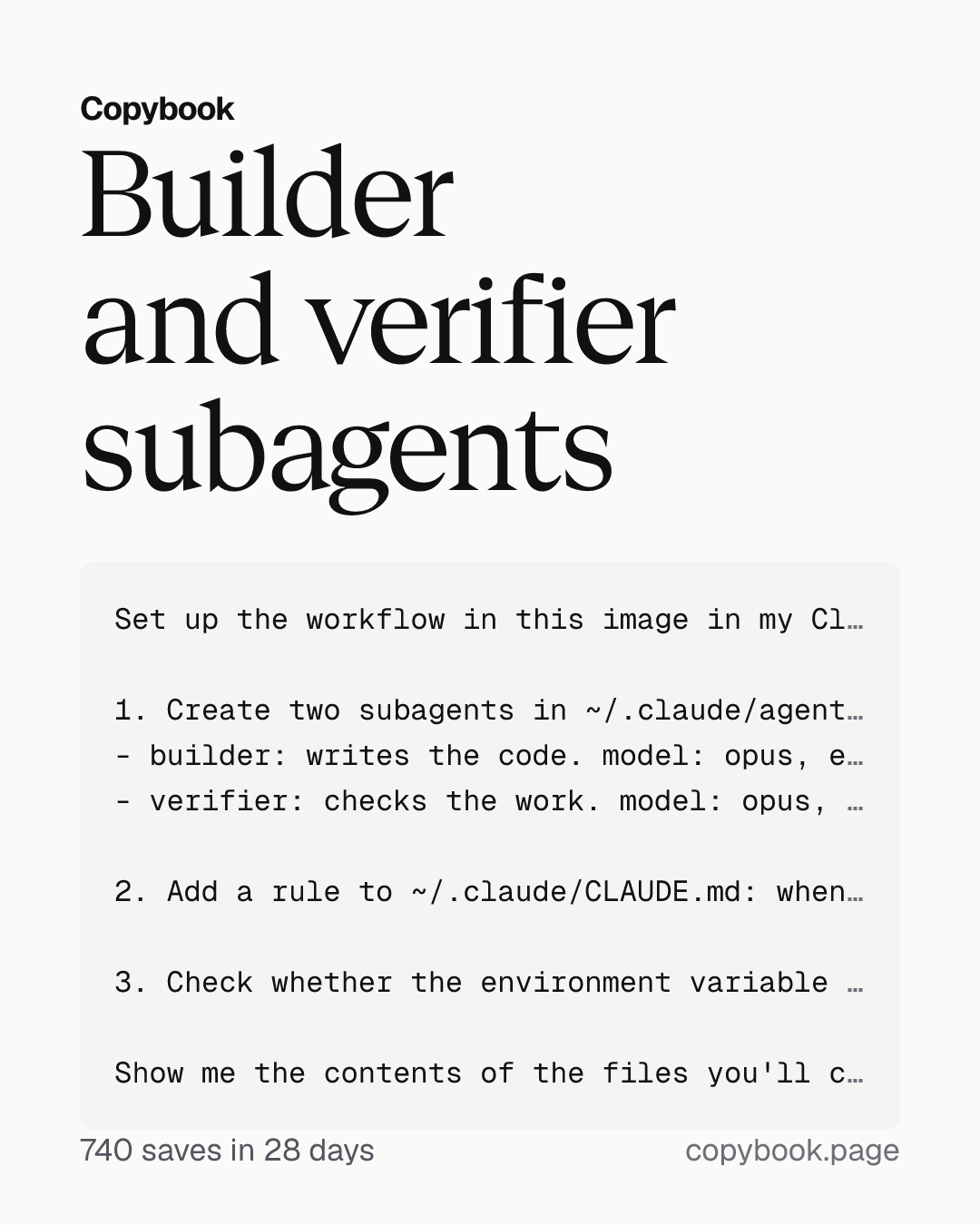
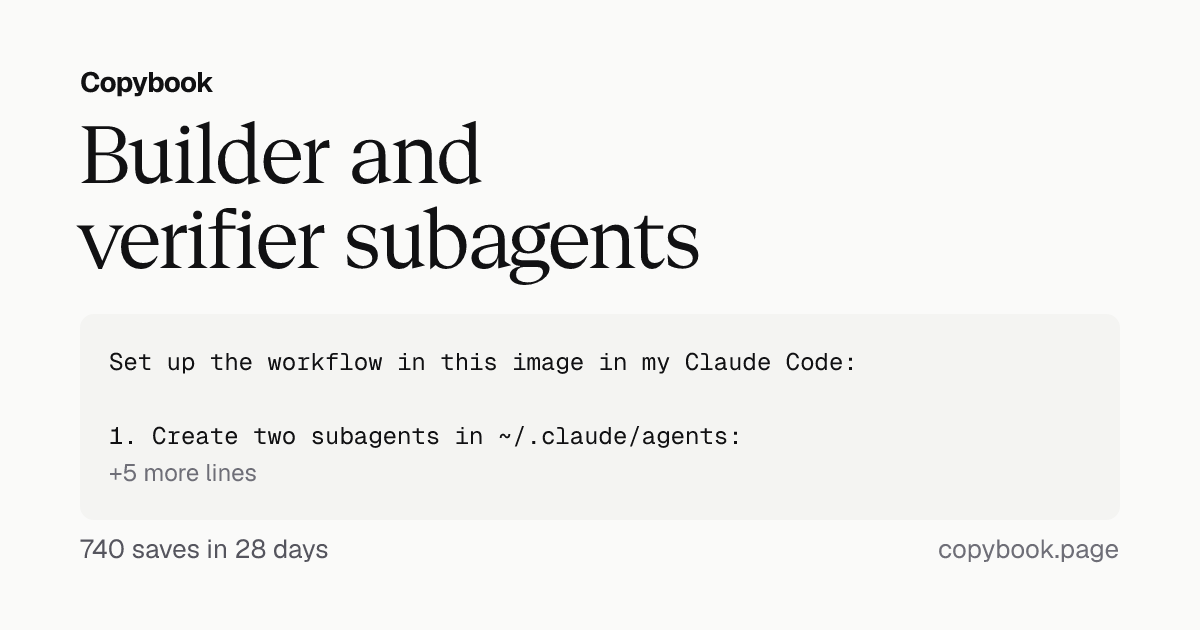
Set up the workflow in this image in my Claude Code:

1. Create two subagents in ~/.claude/agents:
- builder: writes the code. model: opus, effort: low. It implements the spec I've approved and stops when it's done.
- verifier: checks the work. model: opus, effort: high. It runs the feature first to see what it actually does, then adds tests, focusing on edge cases. It reports problems to me and doesn't change the code itself.

2. Add a rule to ~/.claude/CLAUDE.md: when I ask for a new feature, first ask me what the spec is missing; after I confirm, hand it to builder; after I've reviewed the result, hand it to verifier.

3. Check whether the environment variable CLAUDE_CODE_EFFORT_LEVEL is set. If it is, the effort settings on both subagents won't take effect. Just tell me; don't change it.

Show me the contents of the files you'll create or change, then explain the whole workflow in words a 10-year-old could follow. Don't write anything until I confirm.
Next Send it to Claude Code with the workflow image from the post.
Thariq from Anthropic’s Claude Code team published his tests on effort: turning effort up mostly buys more verification and edge-case testing. You can turn his approach into two subagents and have Claude Code follow it.
For new features, he works in four steps:
- Have Claude ask you questions first and fill in what the spec is missing.
- Build it on low. It’s fast, and you can step in anytime.
- Look it over, and if it needs changes, stay on low.
- Switch to high at the end to verify and test.
Share this tip