Setup check: OpenAI’s 5 cheap-harness rules
Is your setup as cheap as OpenAI’s harness: pass or fail on each of its 5 rules, with the file and the one thing to change.
715 saves on X, as of Posted
Prompt
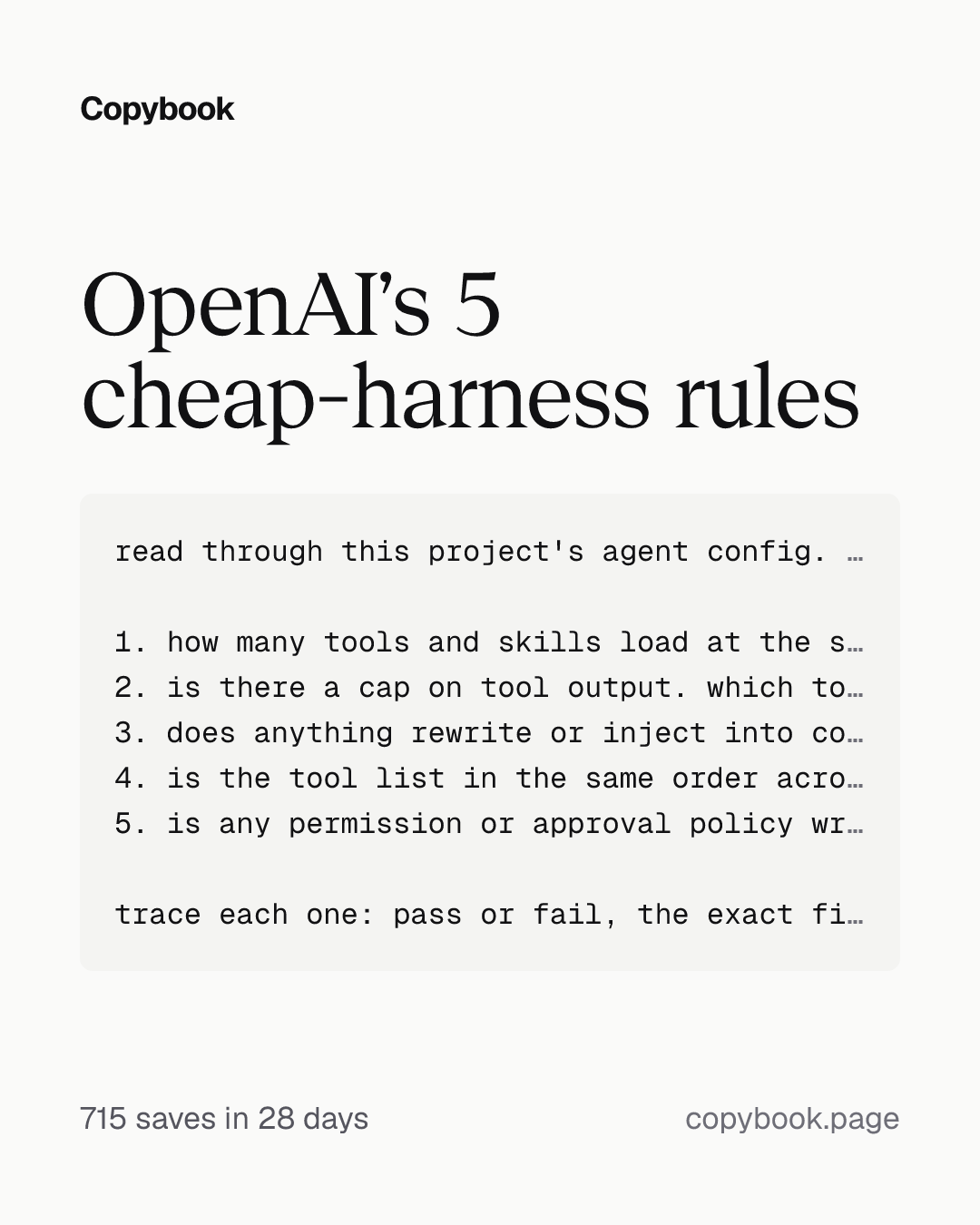
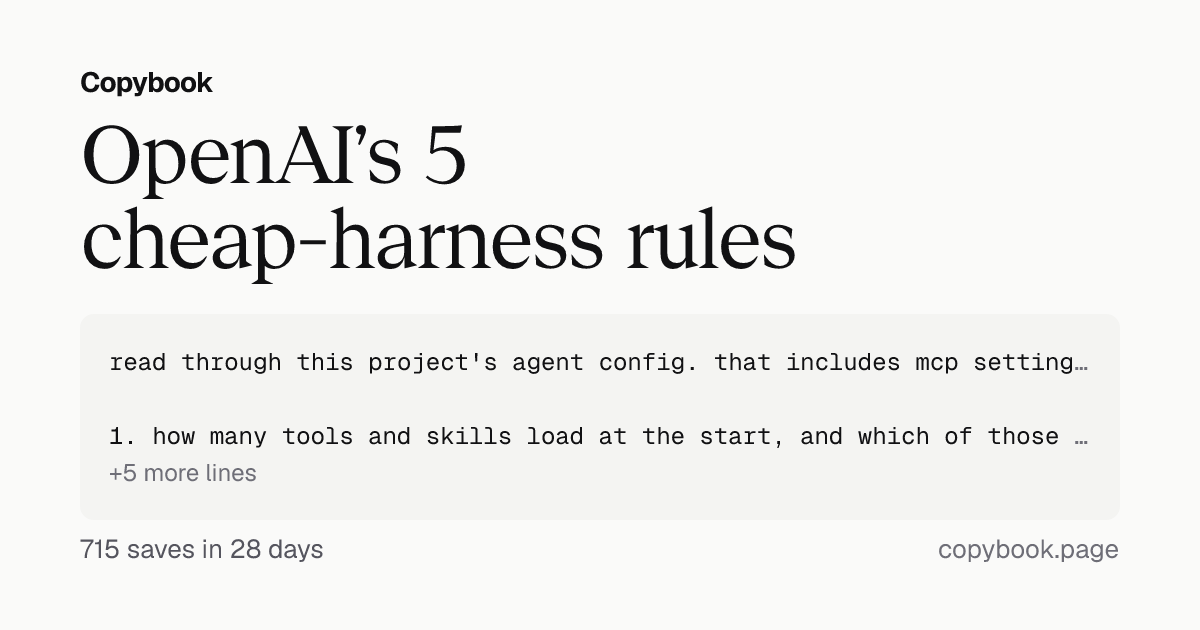
read through this project's agent config. that includes mcp settings, skills, plugins, hooks and rules files. judge it against these five, one at a time. keep the results separate:

1. how many tools and skills load at the start, and which of those have never been called in this project
2. is there a cap on tool output. which tool has returned the biggest payload, and roughly how many tokens
3. does anything rewrite or inject into context that has already been sent, like stamping the current time every turn, re-reading a rules file mid session, or editing the system prompt on the fly
4. is the tool list in the same order across two starts
5. is any permission or approval policy written into a tool description

trace each one: pass or fail, the exact file or entry, and the one thing to change. if you can't find it, say you can't find it. don't make it up.
Next Paste it into whichever agent you use, in your project.
OpenAI published the five rules that keep their own agent harness cheap:
- Deferred discovery: MCP tools, skills and plugins don’t all load at the start. The model only sees them when they’re needed.
- Tool output is capped at 10,000 tokens by default. The model has to ask for a different limit.
- Everything the model can see is append only. New messages, tool results and environment updates go on the end, never back into earlier context.
- Tools are presented in a fixed order.
- Runtime settings like approval policy get applied at execution time instead of being written into the tool definitions.
The last three all keep the prompt prefix byte for byte identical, which is what keeps the cache hitting. They credit Codex and ChatGPT Work’s high cache hit rate to that design.
The prompt works in any agent.
Share this tip