Settingsconfig
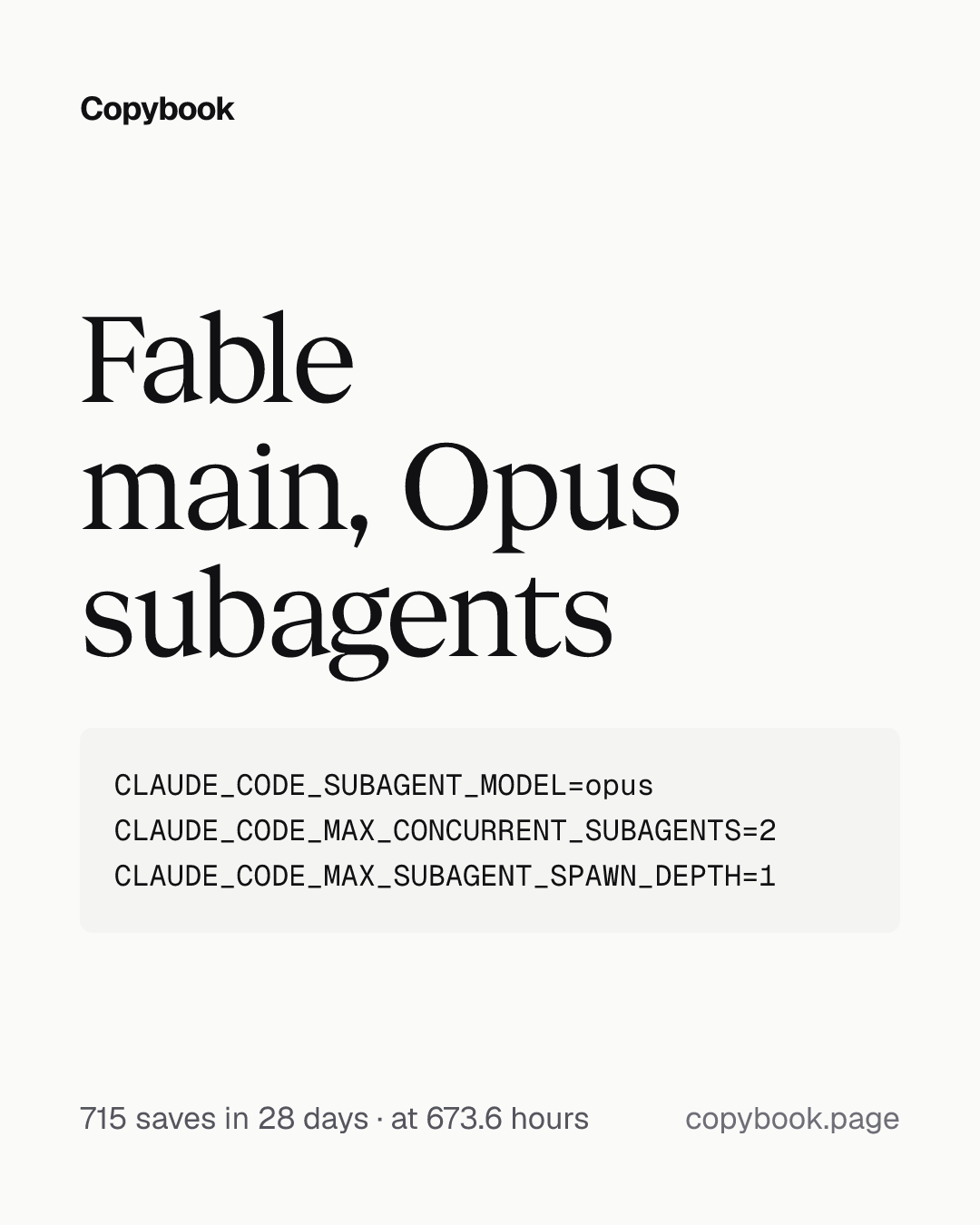
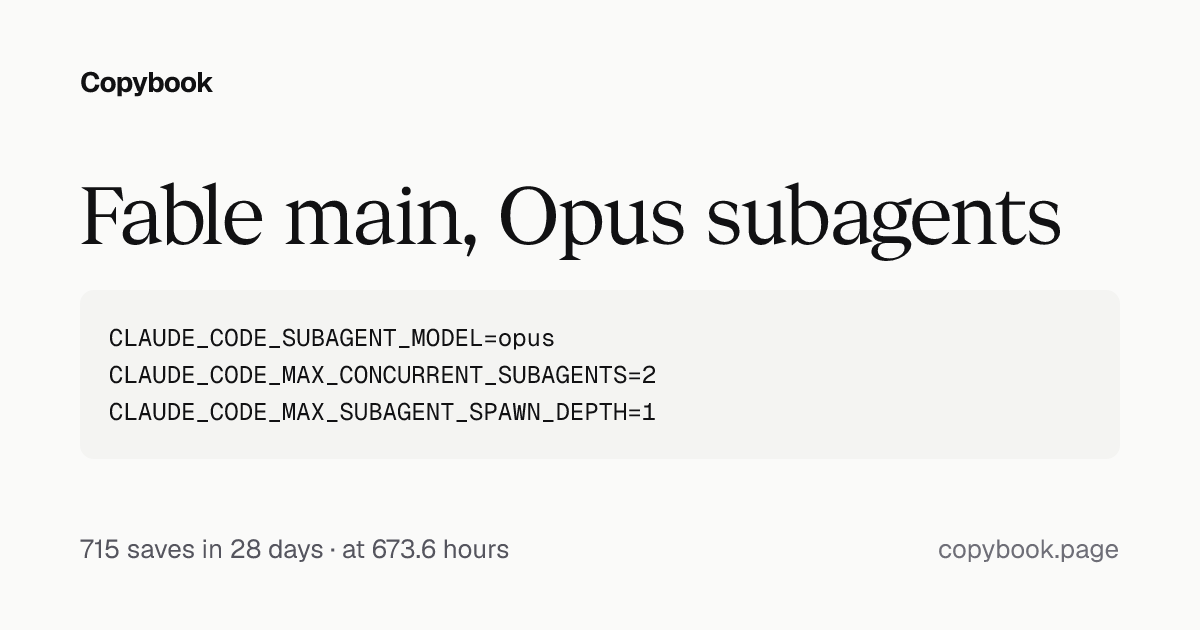
Fable main, Opus subagents: 3 settings
Fable quota going fast: 3 settings send reading and lookups to half-price Opus subagents; Fable keeps the judgment.
715 saves on X, as of Posted
CLAUDE_CODE_SUBAGENT_MODEL=opus
CLAUDE_CODE_MAX_CONCURRENT_SUBAGENTS=2
CLAUDE_CODE_MAX_SUBAGENT_SPAWN_DEPTH=1
Next Set the settings for Claude Code and add the request to your next message.
If you want your Claude quota to last longer, try keeping Fable as your main model and delegating supporting work to Opus subagents as needed.
Opus 5’s listed input and output prices are both half those of Fable 5.1. Keep Fable where you need its judgment, and delegate work like reading code and looking up documentation. Subagents are documented at https://code.claude.com/docs/en/sub-agents.
The first line sets Opus as the default for subagents without overriding existing model settings. It doesn’t change the built-in Explore or Plan models. The second sets the concurrent subagent limit to 2. The third limits delegation to one layer, so your assistants can’t call in assistants of their own.
Update how you assign work along with your settings. Add this to your next request:
Delegate independent research, well-scoped changes, and relevant tests to Opus subagents. Explicitly set model to opus when invoking them, and define the scope and acceptance criteria. Have them complete the assigned work and return the changed files, test commands, actual exit statuses, and unresolved issues. Keep the full logs and provide their paths instead of pasting everything back.

Avoid simultaneous edits to the same files by you and your subagents. When a subagent finishes, review its diff and test results, and run additional checks where needed. Decide how to handle unclear approaches yourself. Handle small tasks directly without spawning extra subagents.
Have subagents return results you can use, so the two models don’t repeat the same investigation. Run /tasks to check which model each subagent is actually using.
Share this tip